
Back
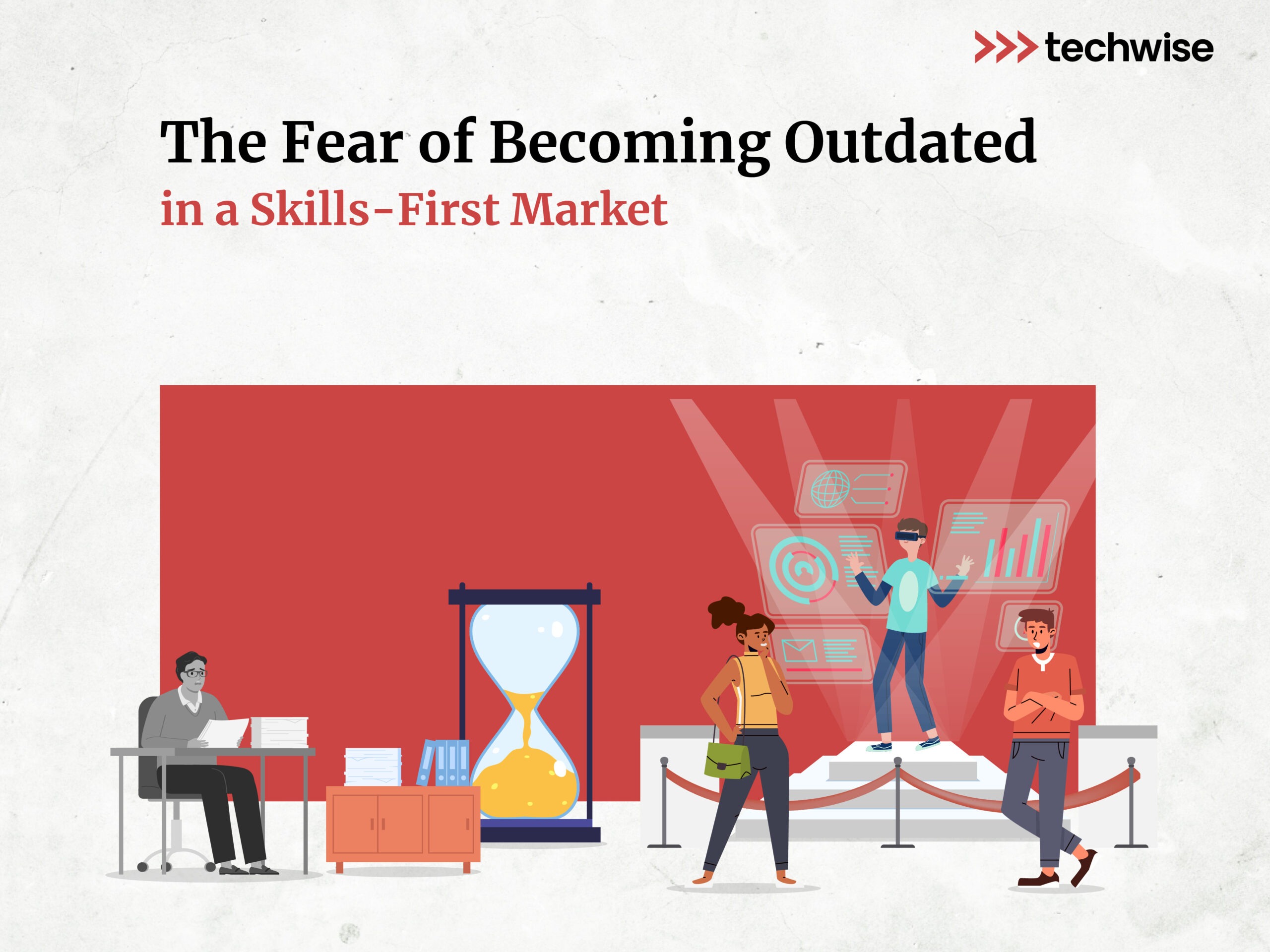
The Fear of Becoming Outdated in a Skills-First Market
September 16, 2026
Let’s be honest! If you have scrolled through LinkedIn, Twitter, or even your newsfeed lately, you have also seen those never ending headlines.
‘Skill first jobs’ or ‘hire for skills not for experience’ or ‘AI Is Coming for Your Job’ and so many more.
And somewhere between the doom-scrolling and other self-help threads, a quiet question creeps in: ‘Am I becoming irrelevant?’
Here is the reality! You are not imagining it anymore, neither are you alone. Your fellow employees are also worried that AI or automation could make their role outdated. Some are even calling it ‘FOBO’ ie the Fear of Becoming Obsolete. It is surely the corporate version of FOMO, but instead of missing out on a party, many of you are worried about missing out on your career.
But most of it is actually the noise, because not many people are discussing the clear way of out of this – to think about skills, learning, and staying relevant in a skills-first world.
What a Skills-First Market Actually Means
Let’s keep those buzzwords aside for a minute and see what is actually happening. In the corporate world today, employers care less about your degree, your job title, or your years of experience, and more about what you can actually do.
For instance, it is not about where you studied or what your last role was called anymore. It is about whether you can solve the problem in front of you or not.
Can you analyze data and tell a story with it? Can you lead a cross-functional project? Can you use AI tools to work smarter, not harder?
This is the real shift that is happening everywhere, from finance to HR and marketing. Companies are now adopting the method of skills-based hiring and project-based work because this is what the moving pace demands right now. Degrees and tenure do not guarantee results – skills do.
What Actually Becomes Outdated (and What Doesn’t)
Not all skills expire at the same speed. Routine tasks expire fast.
Judgment. Communication. Problem-solving. Leadership. Empathy. These never go out of style. In fact, they become more valuable as technology advances.
Consider this:
- Outdated: Manually compiling the weekly reports.
- Durable: Interpreting those reports, spotting trends, and optimising strategy accordingly.
- Outdated: Writing basic code snippets.
- Durable: Designing systems, architecting solutions, and collaborating across teams.
The pattern? Task-level skills become standardized and capability-level skills compound.
How to Build a Career That Stays Relevant
So, how do you respond to this change? Not with panic, but with a plan. Here is a simple framework that can help :
1. Map Your Skills
Break your skill list into three sections:
- Core: Know what is your superpower.
- Adjacent: Skills that complement your core skills (e.g., data literacy for marketers).
- Emerging: What is next that you can adapt? (AI tools, cross-functional awareness, storytelling with data).
2. Identify what is at Risk
Analyse which of your tasks can be automated or standardised in the near future. Be honest. Then, double down on the skills that cannot be easily replicated.
3. Invest in the Right Areas
- AI / Digital literacy: Even if you are not in tech, understand how AI works in your domain. At least get your basics strong.
- Domain depth + cross-functional awareness: Go deep in your field, but learn enough about related areas to collaborate effectively.
- Soft skills that amplify technical work: Storytelling, influence, leadership.
4. Create a Learning Rhythm
You do not need to rebuild your life. All you need to build is a systematic approach:
- Focus on one skill every quarter.
- A small project to apply it.
- Learning from your mates and exchanging feedback.
- Keep a check on the market signals (job descriptions, peer roles, industry trends).
And remember, use AI as a tutor, not a crutch. Use it to personalize your learning, but do not outsource your thinking.
From Fear to Control: Own Your Next Skill
Shift the mindset and replace “I might become outdated” with “I can choose what to master next.”
Your call to action?
- Pick one skill to upgrade in the next 90 days.
- Talk to your manager about learning priorities.
- Integrate learning into your daily job and never treat it as an extra task.
Because in a skills-first world, the real job security is not a title or a degree. It is your learning pace. And that? That is completely in your hands.