
Back
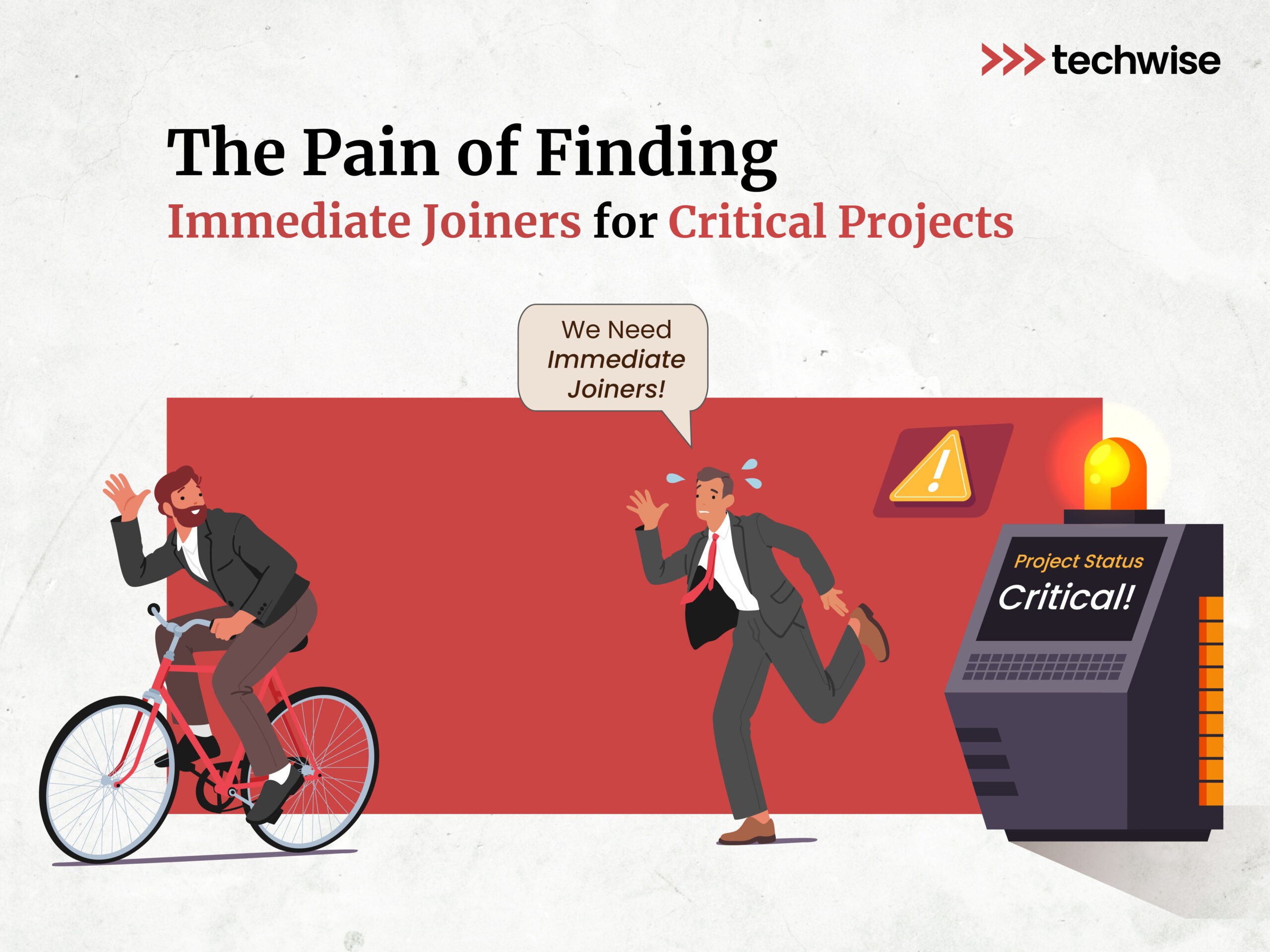
The Pain of Finding Immediate Joiners for Critical Projects
September 22, 2026
Let’s be honest for a second. You have a project. The one that absolutely cannot wait. Maybe it is a client deadline breathing down your neck, maybe it is a product launch that has already been delayed twice, or maybe leadership just walked into your office and said the four words every TA head dreads: “We need this now!!”.
And there you are, staring at your ATS, wondering why the perfect candidate always seems to have a two-month notice period.
Finding great talent is hard. Finding great talent who can start right now is a different beast entirely. It is like trying to order a custom-tailored suit and have it delivered in an hour.
Possible? Rarely. But absolutely painful without the right approach?
An Age-Old Problem That Still Haunting Us Today
Technology does not wait for anyone. Skill requirements that were “nice to have” last quarter are now baseline expectations. Companies are not just competing for market share anymore. They are competing for the handful of people who actually know how to build the thing that wins that market share.
And the people who can hit the ground running are usually the ones who are not actively job hunting. They are already employed, already valued, already serving out notice periods at companies that do not want to let them go either. So, the pool of “immediate joiners” is smaller than you would like, and everyone is hunting in the same small forest.
The old playbook – post a job, wait for applications, screen for weeks, negotiate for another few – simply does not work when the clock is ticking on a project that could make or break your quarter. You need a sharper approach.
7 Smarter Ways to Find Immediate Joiners
You might have had this problem. Scratching your head, trying to find that perfect hire immediately. So, let’s discuss a few things that might help you.
1. Build a “Bench” in Advance
Most companies only start looking when the fire is already burning. The smarter move? Maintain a warm talent pipeline of pre-vetted candidates who have already gone through initial conversations, even if there is no open role for them yet. Think of it as keeping an umbrella by the door instead of running out to buy one mid-rain.
2. Tap Into Your “Boomerang” Employees
Former employees who left on good terms are an underrated goldmine. They already know your systems, your culture, and your quirks. Re-engaging them can shave weeks off onboarding time. A quick, genuine check-in every few months costs you nothing and could save you a critical hire down the line.
3. Skill-Based Micro-Assessments, Not Long Interview Loops
Nothing kills momentum like a five-round interview process for a role that needs filling in five days. Replace lengthy loops with targeted, practical assessments that test exactly what the project needs. It is faster, fairer, and it filters out candidates who talk a good game but cannot deliver.
4. Freelancers and Contractors are a Bridge, Not a Compromise
There is still a lingering bias that contract talent is “second choice”. That mindset needs retiring. Highly skilled freelancers often specialise in jumping into chaos and delivering fast – because that is literally their business model. Bringing one in to stabilise a critical project while you make a permanent hire is not settling – it’s strategy.
5. Get Specific with Your Sourcing
Broad job postings attract broad and often irrelevant responses. Instead, get surgical. Search niche communities, specialised job boards, and industry-specific forums where the exact skillset you need actually hangs out. A smaller, sharper pool beats a massive, unqualified one every time.
6. Speed Up Your Internal Decision-Making
Sometimes the delay is not the market, it is you. If your offer approval process takes two weeks and involves five signoffs, you will lose great candidates to companies that can say “you are hired” the same day. Audit your internal process before you blame the talent pool.
7. Partner With Specialized Staffing and Recruitment Agencies
This is the one most companies underuse – and it might be the most powerful one on this list.
Staffing and recruitment agencies that specialise in tech talent already maintain a ready pool of pre-screened, available professionals who are actively looking to join immediately. They have done the vetting. They know who is available, who is skilled, and who can start on Monday instead of “sometime next quarter”.
Think of it this way: you would not try to fix a burst pipe yourself if you had a plumber on speed dial who could show up in an hour. Specialised agencies work the same way for urgent hiring. They bring:
- Speed – access to talent that is already screened and available.
- Precision – candidates matched to the exact technical requirements of your project.
- Reduced risk – less guesswork, fewer bad hires under pressure.
- Flexibility – options across contract, contract-to-hire, or direct placement.
For critical, time-sensitive projects, this is not outsourcing your hiring problem. It is smart resource allocation.
It is Not About Perks Anymore
Everyone loves talking about culture, free snacks, and flexible work-from-anywhere policies. And sure, those things matter for retention. But when you need someone now, none of that moves the needle. What moves the needle is speed, precision, and having the right partnerships in place before the emergency hits.
The companies that consistently hire immediate joiners are not necessarily offering the highest salaries or the flashiest offices. They are the ones who have built systems, pipelines, partnerships, and processes that let them move at the speed the market demands.
The Real Question to Ask Yourself
Is your hiring process built for “eventually”, or is it built for “right now”?
Because in a market this competitive, “eventually” is not just a delay, it is a lost project, a frustrated stakeholder, and possibly a competitor who got there first.
None of the strategies above require a complete overhaul. Start with one. Build a warm pipeline. Reconnect with a few ex-employees. Have a conversation with a specialised staffing partner before the next fire drill hits your inbox.
Because the next time someone says, “we need this now”, you will actually have an answer ready, instead of scrambling to find one.