
Back
Losing Critical Knowledge During Workforce Transitions
July 22, 2026
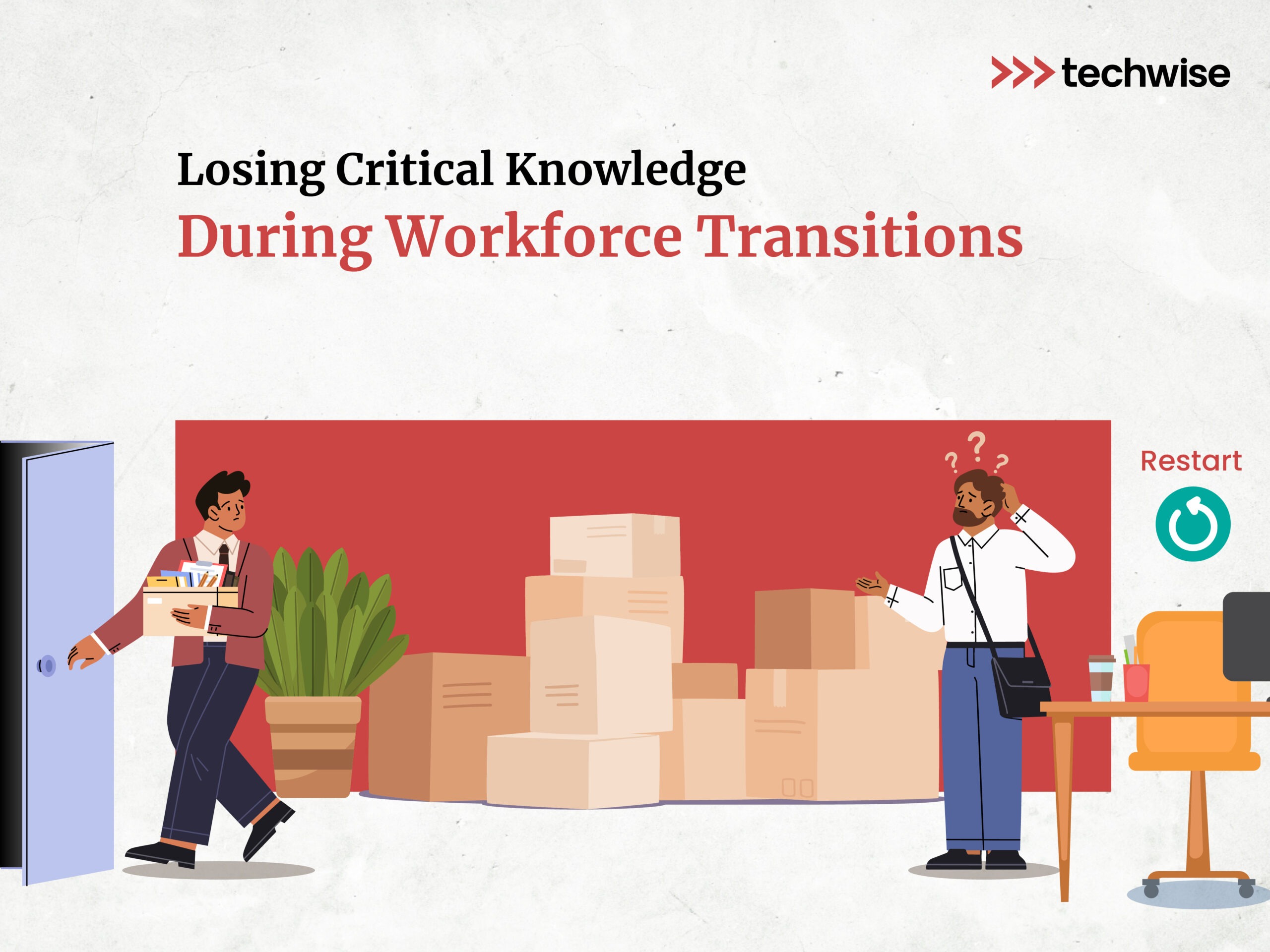
Your best developer just mailed their resignation. Four weeks’ notice, a polite goodbye email, and a cake in the break room. Everyone claps. Everyone smiles. And after they leave, a process breaks in a way nobody can explain, because the one person who understood why that legacy script exists is now working somewhere else, unaware that their old team is staring at a screen full of question marks.
Sounds familiar?
We talk a lot about talent acquisition. We obsess over sourcing strategies, employer branding, and candidate experience. But there’s a quieter crisis brewing in most organisations, one that does not make it into quarterly reviews until it is already too late: the slow, silent leak of crucial knowledge every time someone leaves.
The Invisible Operating Manual
Knowledge loss is not a tech industry quirk, though tech gets hit especially hard because processes evolve so fast and so much tribal knowledge lives in people’s heads rather than in documentation.
Every organisation runs on invisible rules. The reason a particular vendor gets called before another. The reason your team avoids deploying on Fridays. None of this is written down anywhere officially. It lives in message threads, hallway conversations, and the mental archives of your most experienced people.
And when those people leave? That knowledge does not get an exit interview. It just leaves with them.
The Reality of “Let’s Figure It Out Later”
Let’s be honest about what happens when knowledge transfer is an afterthought.
- Repeated mistakes. Someone makes the same costly error that your last hire already solved, because nobody told them it had already happened.
- Slower ramp-up times. New employees spend weeks reverse-engineering processes that could have been explained in a single afternoon.
- Over-reliance on “the one person who knows”. You know the person. Everyone does. The one whose vacation requests make the whole team nervous.
- Institutional amnesia. You remove the extra step added to a process 6 months ago. No one remembers why it was done in the first place. And then, same problem appears as before and you add the same step again.
None of this shows up on a balance sheet, but ask any operations leader, and they will tell you – it is expensive. Painfully expensive.
Rethinking When Knowledge Sharing Should Happen
Why do most companies only think about knowledge transfer once someone resigns? That’s a bit like waiting for a fire to start before buying a smoke detector.
The smartest organisations do not treat knowledge sharing as an offboarding checkbox. They treat it as an ongoing habit, woven into how teams already work. Because your most experienced employees carry knowledge that’s valuable right now, not just on their way out.
Waiting for a notice period to “download” someone’s brain is a terrible strategy. Two weeks is barely enough time to transfer passwords, let alone years of accumulated judgment.
Building a Knowledge-Sharing Culture
So, what can be a better approach for this? A few things that consistently move the needle include:
1. Document as you go, not as you leave.
Encourage teams to write things down the moment a decision is made, not months later when memory has already started to fade. A simple internal wiki beats a brilliant memory every time.
2. Pair experienced employees with newer ones.
The buddy system starts and ends within 1-3 months of someone new joining the team. You need to build mentorship as a part of your culture. Ongoing mentorship spreads knowledge naturally, so it is never just sitting in one head.
3. Normalise “boring” documentation.
Nobody gets excited about writing a process document. But make it part of how success is measured, and people start treating it like a real deliverable, not a chore nobody has time for. That documentation will help you avoid many crises that you are not even aware of.
4. Run structured exit interviews that go beyond feedback.
Ask departing employees to walk through their responsibilities, quirks in their workflow, and anything a successor absolutely needs to know. Record it if you can. Only knowing their experience with you and asking for input regarding culture is not enough. Future-you will be grateful.
5. Build a “knowledge map”.
Identify who holds critical, hard-to-replace knowledge across your teams. It sounds simple, but most organisations have never actually mapped this out, and you cannot protect what you have not identified.
Why This Matters More for HR Teams
You might be wondering why this should sit on your desk instead of an operations manager’s. Fair question.
HR leaders sit at a unique intersection. You are the ones who understand the full employee lifecycle, from the first interview to the final goodbye. You know the actual attrition patterns, tenure trends, and succession gaps. These things are simply not visible to other departments.
Every time you hire, you are not just filling a seat. You are eventually creating a knowledge gap that someone, someday, will need to fill again. Building knowledge retention and transfer processes early means you are not scrambling every single time someone decides to move on.
A Small Mindset Shift, A Big Payoff
You do not have to build the whole process overnight. No one can prepare an elaborate corporate memory bank in a few days. Start small. Pick one team. Document their workflows, the hidden workings of the system. Write everything down. Repeat.
Knowledge sharing is not glamorous. It will not make headlines. But it is the kind of quiet work that saves organisations from repeating expensive mistakes and losing months of productivity every time someone says goodbye.
So, here’s the real question worth asking your leadership team this week: if your top three performers left tomorrow, would your organisation actually survive the knowledge gap, or just hope for the best?
If the honest answer makes you a little nervous, that is your sign to start building the habit today, not during someone’s exit interview.