
Back
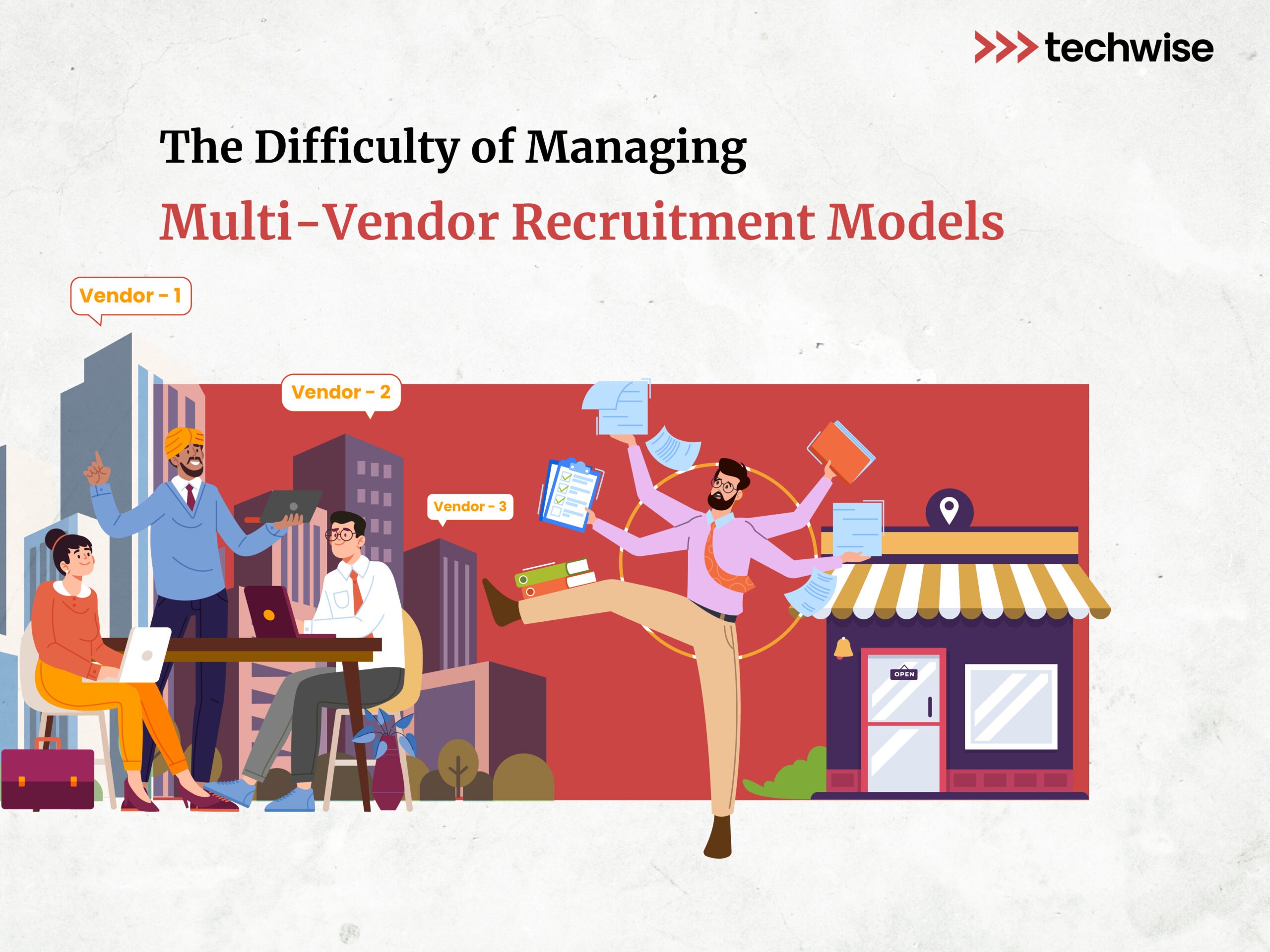
The Difficulty of Managing Multi-Vendor Recruitment Models
November 26, 2026
It’s Monday, 9:15 a.m., and three agencies have sent you the exact same candidate for the exact same role. A fourth agency has emailed another follow-up for the profiles they shared last week. Meanwhile, the candidate has been called four times in two days and is now wondering how your company runs its hiring.
This is the multi-vendor recruitment model. We get why companies do it. When your internal team is already juggling a pile of open requisitions, you bring in external recruitment partners. And relying on just one? That can feel like doing all your shopping at a single corner store. You may not get the best value, and your reach into the talent market stays limited.
So, you onboard several vendors, each with their own expertise, pricing model and contract terms. Good plan. But who keeps all those moving parts in line? The same TA team that was too busy in the first place.
Four Difficulties You Will Probably Recognise
Managing a multi-vendor recruitment model can be a lot of work, especially when the process is scattered across functions and different contractual terms.
1. Inconsistent Candidate Quality
Every vendor has their own way of sourcing, screening and shortlisting. So, what lands on your desk is never quite the same from one vendor to the next. One agency obsesses over past experience. Second one focuses more on organisational fit and latent capabilities. Neither is wrong.
It is like asking five people to describe the same movie. Each will be very different from other. And each one sounding confident.
Because you cannot run one standard screening process on profiles built on different logic, things slow down. Interview loads go up. And slowly, your confidence in vendor recommendations starts to wobble.
Hiring managers begin to ask, “Were these actually vetted?”
2. Candidate Duplicity
When several vendors work the same role, it is very likely that the same person shows up in more than one submission. So, who owns that candidate? Who gets the fee? If nobody has decided in advance, you are heading into ownership arguments and delayed decisions.
The bigger cost, though, is the candidate’s experience. Imagine getting calls and emails from several recruiters about one job. It feels messy, and honestly, a little desperate. It leaves a poor first impression of your company and raises doubts about your recruitment process. Strong candidates have options, and they tend to quietly walk away.
3. A Heavier Admin Workload
More partners mean more coordination, and it does not stay inside the TA team. HR, Finance and hiring managers all get pulled in. Each vendor comes with their own invoicing format, reporting style and favourite way to communicate (some love email, some love calls).
Every relationship also needs time: tracking performance, fixing operational hiccups, answering “quick questions”. Do that across a half-dozen vendors and your team has almost no hours left for anything else.
If a hiring manager asks, “Which agency sent this profile, and what are we paying for it?” and your team scatters to find the first email in which the profile arrived, you already know where the pain is.
4. Compliance Gets Complicated, Fast
Not every recruitment partner works the same way. They may treat worker classification, documentation and onboarding differently, and keeping an eye on all of it takes real resources. When it slips, you open the door to non-compliance with local labour laws and a slow dilution of your own governance standards.
Think of it as five different kitchens cooking for one restaurant. You are still the one answering to the health inspector. That is not a small risk.
Making Multi-Vendor Recruitment Easier to Manage
So, is the model doomed? Not at all. It just needs structure.
1. Multiple Vendors, One Standard Process
Each vendor has their own way of working, but most are flexible enough to adapt to yours. So, build a clear process flow before you onboard anyone, and share it up front. A simple one-page guide covering screening criteria, submission format, invoicing rules, and response times does most of the heavy lifting. Once everyone follows the same workflow, your HR and Finance teams stop juggling five versions of invoicing and onboarding.
2. Route All Submissions into a Single Pipeline
If profiles land in individual recruiters’ inboxes, your candidates end up scattered across the whole team. Instead, send every submission to one place. It is easier to track, and as a bonus, it helps you spot duplicates early.
3. Catch Duplicates the Moment They Arrive
Before interviews begin, automate duplicate detection. Flagging early helps you avoid ownership and fee disputes later. Also set a fixed ownership window for each submitted profile. It makes no sense for a vendor to own a candidate they shared eight months ago. A window of three to six months is a safe range. Talk it through with every vendor clearly, so there are no arguments down the road.
4. Keep Communication Clear & Direct
Give vendors a direct channel to your team and share status updates on time. Most importantly, share feedback on the profiles they send. Without it, vendors are guessing what you want, and guessing is expensive for both sides. Good feedback is the cheapest quality-improvement tool you have.
5. Score Every Vendor on the Same Scorecard
If all you track is the number of profiles each vendor sends, you are measuring activity, not value. To build a partnership that actually pays off, decide what you are going to assess, and review it every quarter. A solid starting list includes:
- Time to first submission
- Submission-to-shortlist rate
- Shortlist-to-offer rate
- Offer acceptance and joining rate
- Duplicate or instant rejection rate
Score each vendor, see who is doing the good work, and you will know exactly who to call when a more crucial role opens up.
Final Thoughts
A multi-vendor model is not the problem. An unmanaged one is. When you set the rules early and keep everyone on the same page, vendors start to feel like an extension of your team instead of five separate to do lists.
So, take an honest look at your own setup. Where is it leaking time? Duplicate profiles? Feedback that never gets shared? A scorecard that does not exist yet? Pick one fix from this list and try it this quarter.