
Back
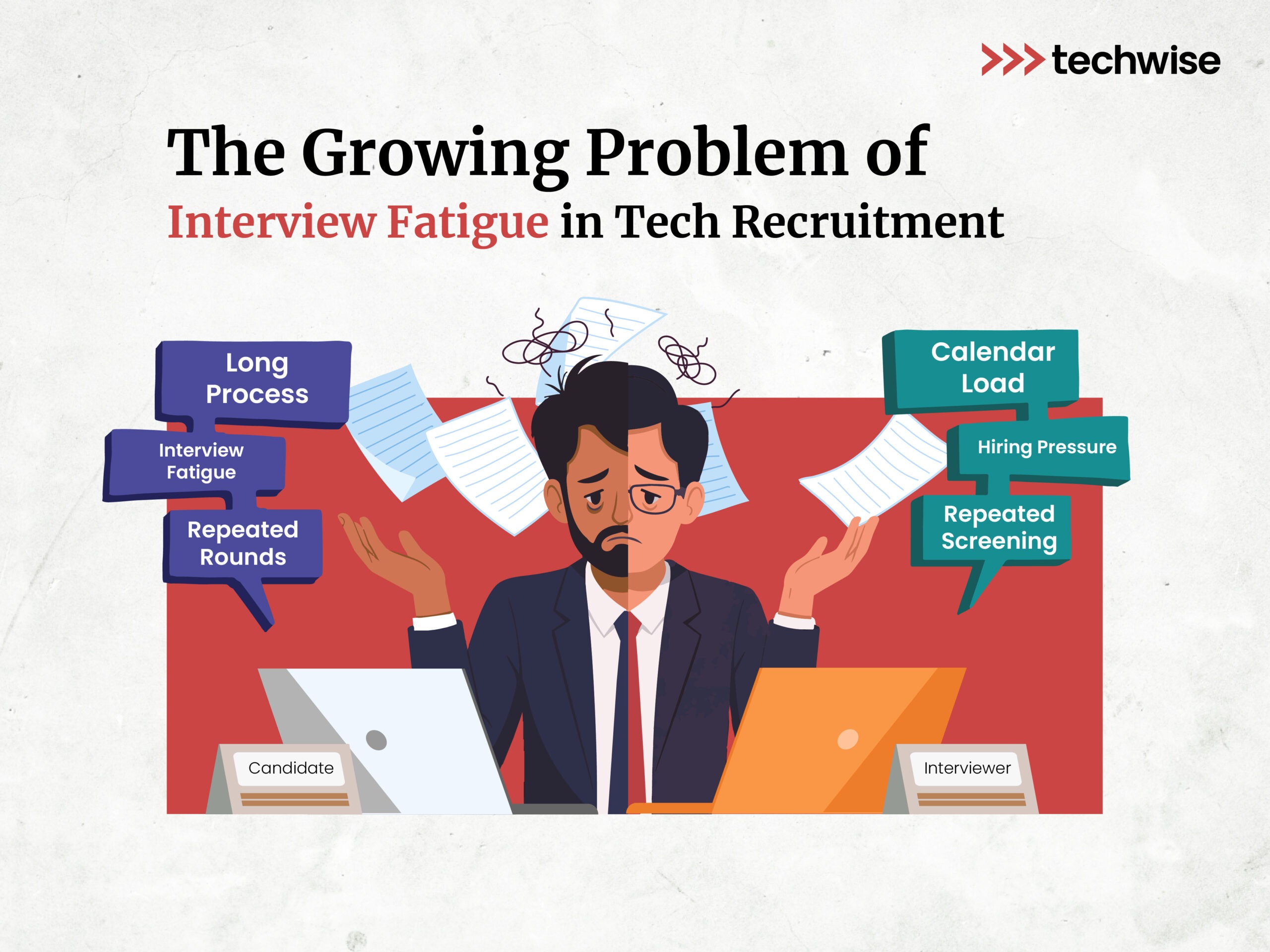
The Growing Problem of Interview Fatigue in Tech Recruitment
September 2, 2026
A brilliant engineer, the kind who solves problems for fun on weekends, applies to your company. Round one goes great. Round two, even better. By round four, they are explaining their approach to system design with the confidence of someone who already works there. Then round five happens. Then round six gets scheduled. And somewhere between the take-home assignment and the “quick culture chat” that runs forty-five minutes long, they accept an offer. From someone else.
Sound familiar? You are not imagining it. Interview fatigue is real, it is expensive, and it is quietly costing tech companies the best talent.
What Exactly is Interview Fatigue?
Let’s keep it simple. Interview fatigue is what happens when a hiring process drags on so long and asks so much that everyone involved – candidates and hiring teams – simply runs out of steam. It’s not laziness. It’s not a lack of interest. It’s exhaustion and old-fashioned burnout.
Think about the last time you sat through six back-to-back rounds of interviews for a single role. Now imagine doing that while also holding down your current job, prepping for two other interview processes, and pretending you are “just really excited about this opportunity” in every follow-up email. Exhausting, right?
And it is not just candidates who feel it. Hiring managers scheduling their fifth panel of the week, recruiters chasing feedback from three different stakeholders, interviewers reading the same resume for the third time because nobody wrote proper notes – they are tired too. Everyone is tired. The whole system is running out of fuel.
Why Tech Recruitment Got Here
Tech hiring did not always look like a decathlon. So, what changed?
- The stakes got higher. One bad senior engineering hire can cost six figures and six months of lost momentum, so companies added “just one more round” to be safe.
- Everyone wants a say. Between the hiring manager, the team lead, and occasionally someone from a completely unrelated department who “just wants to meet them”, panels ballooned.
- Skills changed faster than processes did. New tech stacks, new frameworks, new buzzwords – recruitment teams kept bolting on extra technical rounds to “make sure”, without ever removing the old ones.
- Remote hiring removed natural friction. No travel, no scheduling around flights, no real cost to adding “just one more call”. So, companies added it. Again, and again.
None of this is unreasonable on their own. Together, though, they have created a process that looks less like hiring and more like an endurance sport.
The Real Cost of a Slow, Bloated Process
Speed is now a competitive advantage in tech hiring, maybe even more than compensation.
While your company is still finalising feedback from round three, a competitor has already made an offer. Not because they pay more. Not because their perks are flashier. Simply because they moved faster, and the candidate – tired and increasingly unsure if this process reflects how the company operates – took it.
A few things tend to happen when interview fatigue sets in:
- Top talent drops out mid-process. The best candidates usually have options, and options do not wait around.
- Interview quality drops. A tired interviewer on their fourth panel of the day asks weaker questions and remembers less.
- Candidate experience takes a hit. And in a world of Glassdoor reviews and group chats, that reputation spreads fast.
- Internal teams burn out too. Recruiters and hiring managers juggling endless interview loops on top of their actual jobs start to disengage from the process itself.
It is a bit like ordering food. And then you are told to wait “just a few more minutes” for the sixth time. At some point, you stop believing it, and you order from somewhere else.
What Companies Can Actually Do About It
Most will say to “streamline your process”. But that’s just the surface.
- Consolidate, do not just cut. Instead of removing rounds and hoping for the best, combine them. A technical round and a culture conversation can often happen in one session, if well-structured. No need for two separate meetings on two separate days.
- Interviewers must understand what they are hiring for. A well-prepared interviewer asks sharper questions in 30 minutes than an unprepared one does in 90. Less time, better signal.
- Set a hard cap on rounds – and stick to it. Three to four rounds is usually enough to evaluate skills, culture fit, and team dynamics for most roles. If your process genuinely needs six, ask why, honestly.
- Make decisions faster by deciding faster internally. Sometimes, the interviews themselves do not take that much of time. It is the time you wait for five people to “circle back”. Build a same-week decision norm and protect it.
- Treat candidates like people who have other plans. Because they do. Clear timelines, honest updates, and quick feedback are not just nice-to-haves anymore – they are table stakes.
- Consider a “decision day” format. Run condensed hiring days where every round happens in a single day, and candidates hear back within 48 hours. It is intense, sure, but it respects everyone’s time – and it wins offers.
Seeking Help from Outside
Most companies think that they can hire the best talent available in the market on their own. While they are not wrong, doing that will take time, a lot of it. And while you are going through 6 rounds of interviews for every candidate, every role, interview fatigue starts to set in.
That is where external recruitment partners can help, especially for the cutting-edge tech roles where talent is already scarce, and the competition is more intense than ever.
External hiring partners have a tight hold on the market. They understand your requirements simply because they are in the business to do so. Their network already has ready-to-deploy talent that can start working anywhere within 48 hours to a couple of weeks. All you need to do is assess a few things like cultural fit and behavioural assessment based on your company’s environment.
The Bottom Line
Interview fatigue is not just a candidate problem or a recruiter problem. It is an organisational one, and it is only getting more visible as tech talent gets more selective about where they spend their time.
Huge budgets are not going to help you win this talent war. But you do need to figure out how to move with intention, respect people’s time, and make a decision before someone else makes the offer.
So, if a great candidate went through your hiring process today, would they come out the other side excited to join – or just relieved it is finally over?
If it is the latter, it might be time for a rethink.