
Back
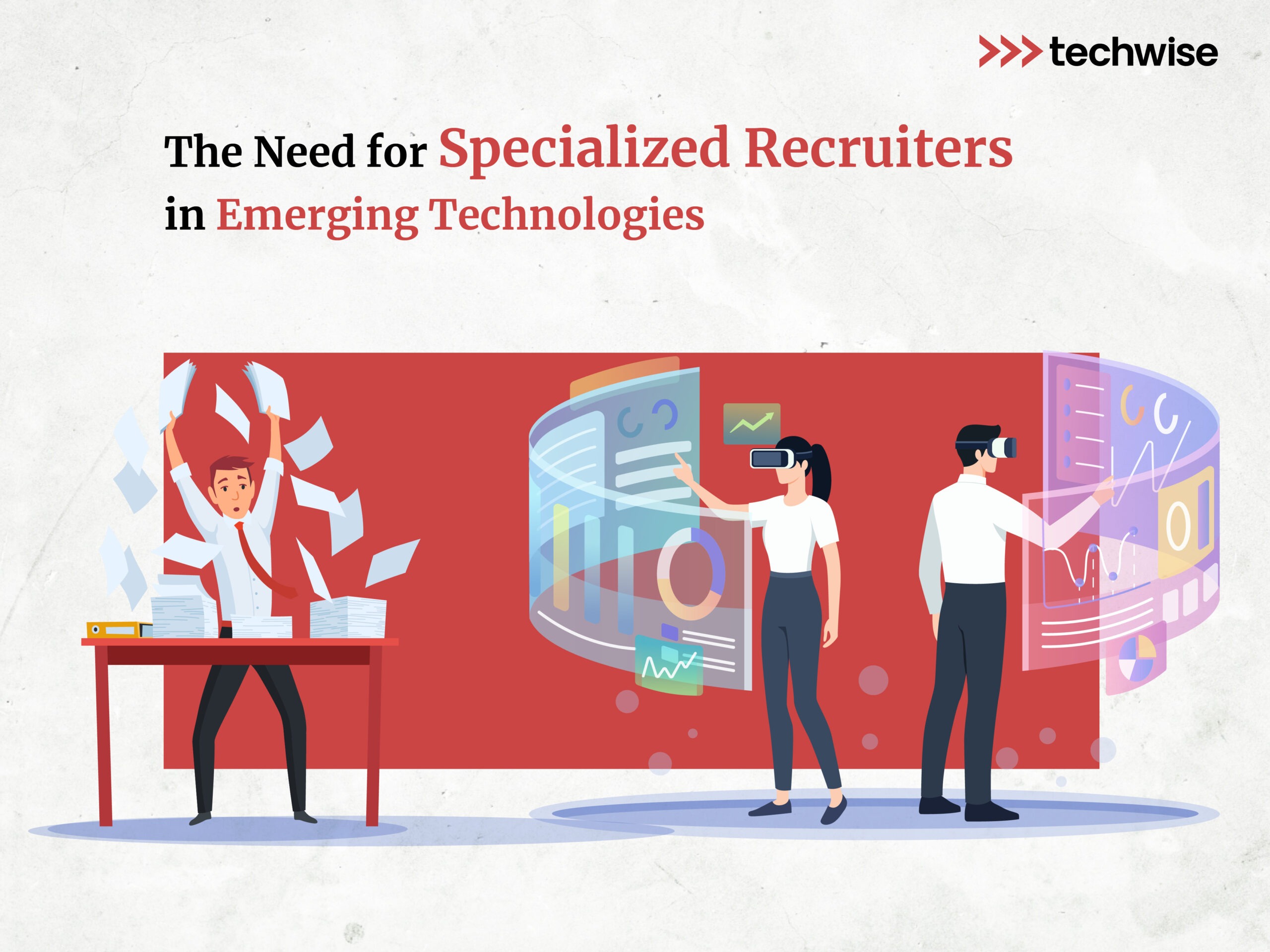
The Need for Specialized Recruiters in Emerging Technologies
August 19, 2026
Would you let a general physician perform brain surgery? Probably not. You would want a neurosurgeon. Someone who has spent years learning the exact organ they are operating on.
So, why do we still expect general recruiters to hire for AI engineers, quantum computing researchers, and cybersecurity architects? It’s the same logic problem. It is just wearing a business-casual outfit.
Technology is not just evolving anymore. It is sprinting. AI, cloud, machine learning, IoT, quantum computing – these are not buzzwords floating around LinkedIn posts. They are the backbone of how companies operate today. And the people who can actually build, secure, and scale these systems? They are rare.
Which means hiring them is no longer a “post a job and wait” situation. It is a full-blown talent hunt, and most companies are still using outdated maps.
Why Old-School Recruiting Does Not Cut It Anymore
A few years ago, recruiters did not need to know the difference between a data lake and a data warehouse. They screened resumes for keywords, checked a few boxes, and passed candidates along. It worked okay because the roles were not this specialised.
Fast forward to now, and that approach falls apart pretty quickly.
Here’s why:
- The skills are hyper-specific. Knowing “AI” is not enough. Is the candidate strong in NLP, computer vision, reinforcement learning, or generative models? A generalist recruiter often cannot tell the difference, and honestly, why would they?
- The talent pool is small and shrinking further. And when the pond is small, poaching becomes less of an exception and more of a Tuesday.
- Speed matters more than ever. The best talent in emerging tech gets numerous offers. A slow, generic hiring process just watches them walk away.
Would you send someone without any coding experience to interview a backend engineer? No, right. Yet somehow, that’s exactly what happens. Companies start to rely on recruiters with zero technical depth to hire for cutting-edge roles.
What Makes a Specialised Recruiter Actually Different
Think of specialised recruiters as translators. They speak both languages – the technical one your engineering team uses, and the human one your candidates respond to.
A specialised recruiter in emerging tech typically:
- Understands the tech stack beyond the job title. They know how a machine learning engineer differs from a data scientist.
- Asks the right questions. Instead of “tell me about your experience with cloud,” they are asking about specific architectures, deployment challenges, and real project outcomes.
- Speaks candidate, too. Top tech talent gets bored fast with vague job descriptions and recruiters who clearly Googled “what is Kubernetes” five minutes before the call.
- Builds long-term relationships within niche tech communities. So, when you need to hire fast, they are not starting from zero.
This is not about recruiters becoming engineers. It is about them knowing enough to hold a real conversation, spot genuine expertise, and filter out candidates who talk a good game but cannot back it up.
The Real Cost of Getting This Wrong
Money is not the only cost of a wrong hire in emerging tech. It costs you time, momentum, and sometimes your competitive edge.
You spend three months hiring an “AI expert” who turns out to have surface-level knowledge dressed up in confident language. By the time you realise the gap, your competitor has already shipped the product you were trying to build.
Mis-hires in specialised roles are expensive in ways that do not always show up on a spreadsheet:
- Delayed product timelines.
- Team morale takes a hit. Because nobody likes carrying the weight of a hire who cannot deliver.
- Rehiring costs, which are never just “redo the process” – it is redoing it slower, because trust has eroded.
- Damage to employer brand in tight-knit tech communities where word travels fast.
Funny enough, the biggest hiring regret is often not a bad candidate – it is trusting a hiring process that was not built for the role in the first place.
What’s the Fix?
Not every organisation can build an in-house specialised recruitment team. Not for every single emerging technology. That’s expensive and unrealistic for most companies unless you are hiring at massive scale.
Now, imagine having these specialised recruiters on call, without overhead costs. That’s what a specialised staffing organisation brings. You do not build an entire technical recruiting bench. Instead, you get recruiters who already live and breathe these domains. They know the market rates. They know where the talent is. And, most importantly, they can move fast without compromising on quality.
Think of it less like outsourcing and more like borrowing expertise you do not need to own full-time.
Wrapping It Up
The technology landscape is not slowing down, and honestly, it is not going to. AI, cybersecurity, cloud, ML – these fields will keep evolving, and the talent required to build them will keep getting harder to find.
Generalist recruiting worked in a different era. This one calls for something sharper. Specialised recruiters bring the technical fluency, market insight, and speed that emerging tech hiring genuinely demands. The gap between “good enough” and “actually equipped” is where a lot of hiring decisions quietly succeed or fail.
So, if you are a TA leader staring down a list of open requirements for roles you barely understand, ask yourself: is your current hiring process built for this era of tech, or the last one?