
Back
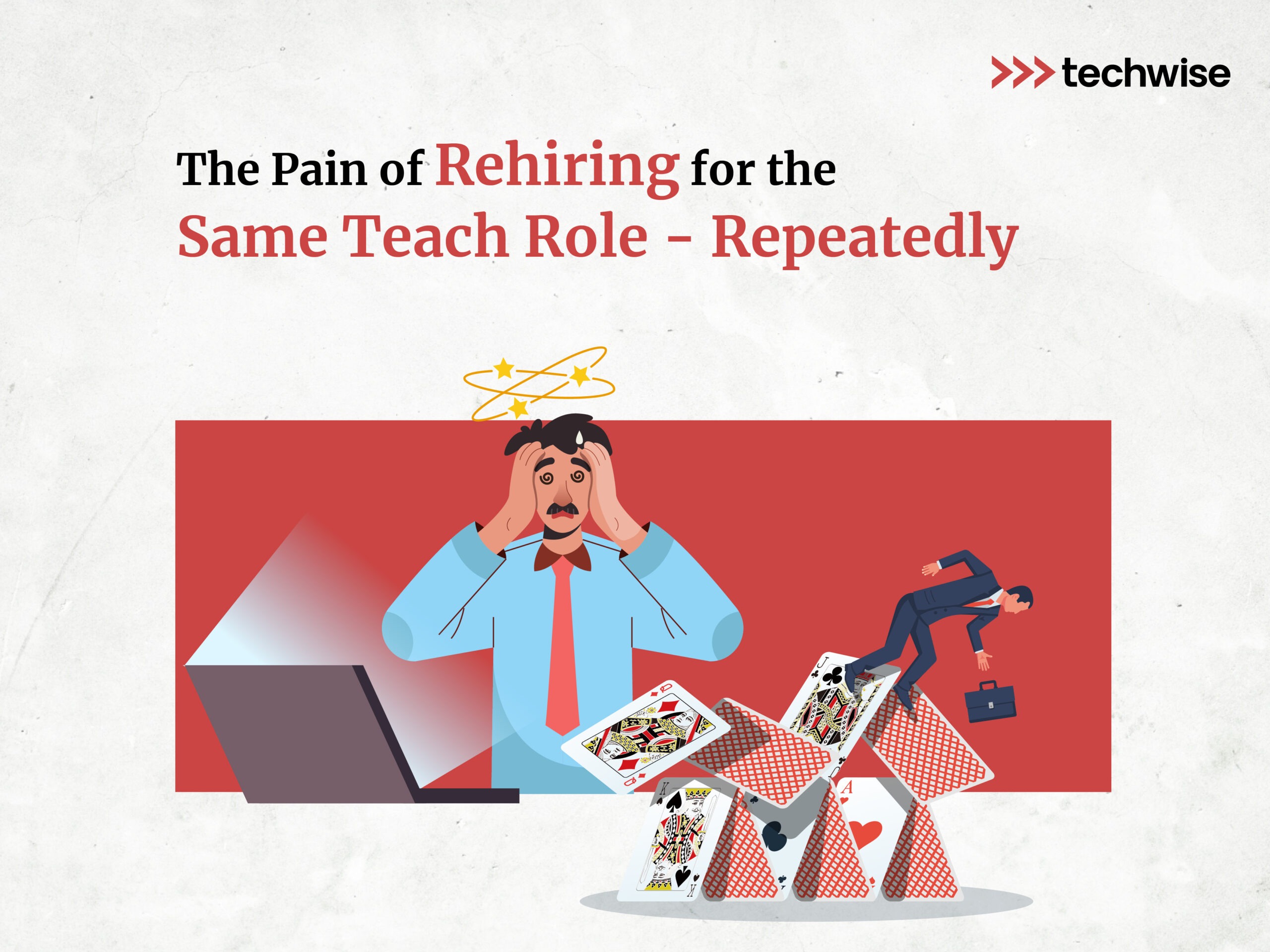
The Pain of Rehiring for the Same Tech Role – Repeatedly
July 15, 2026
Let’s do a quick activity. Imagine your cybersecurity lead’s desk chair. Now picture it empty. Again.
If that image feels a little too relatable, you already know the problem we are referring to. This is the strange, expensive, and slightly humiliating loop that most tech organisations know all too well: hiring for the same role, over and over.
You filled that AI ethicist role six months ago. You celebrated. The “please welcome” email was sent. And now? You are back on LinkedIn, rewriting the same job description, wondering if you should just save the draft as a template at this point.
You are not imagining it. And you are definitely not alone.
Why This Keeps Happening
Repeated rehiring for the same tech role is rarely a hiring problem. It is a retention problem wearing a hiring costume.
Sure, talent poaching is real. Competitors are circling like sharks who just found out your top data scientist posts a little too much on LinkedIn. Salary inflation is not helping either – when someone can get a 30% bump by simply switching Slack workspaces, loyalty starts to feel like a luxury item.
But dig a little deeper, and a few quieter culprits show up:
- The role itself was never clearly defined. If three different managers describe the job three different ways, do not be shocked when the person you hire leaves confused and unfulfilled.
- Onboarding is an afterthought. A brilliant hire dropped into a chaotic first 90 days will start job-hunting by month four. We promise you, they will.
- The manager, not the mission, is the reason people leave. You have heard this one before. It’s a cliche because it is painfully, repeatedly true.
- Career growth is a mirage. Tech talent does not just want a paycheck. They want the next step. If there is not one, they will find it somewhere else – probably somewhere with a title bump.
None of these shows up neatly on an exit interview form. They hide in the in-between spaces – the unspoken frustrations, the “it is just not the right fit” resignations that are, more often than not, a polite way of saying “you never really had me.”
The Real Cost
Is money the only cost of a bad hire. No. Well, it is expensive – replacing a mid-to-senior tech employee can cost anywhere from half to twice their annual salary once you factor in recruitment, onboarding, and lost productivity. But honestly? The number on the spreadsheet is the least interesting part.
Here’s what actually happens when you are stuck in a rehiring loop:
Team Morale Takes the Hit
Every time a key tech role opens up again, the remaining team absorbs the slack. Literally and figuratively. Deadlines do not move just because your DevOps lead quit – someone else picks up the pager duty, and resentment quietly compounds.
Institutional Knowledge Goes Out the Door
Every departure means someone else has to relearn the quirks of your systems, your undocumented workflows, your “oh yeah, that one server only restarts on Tuesdays” tribal knowledge. That is not a skill gap. That is an amnesia loop.
Your Employer Brand Starts Whispering Things
Job seekers talk. Glassdoor reviews accumulate. If your cybersecurity role has been “recently vacated” three times in two years, candidates notice – and the good ones start asking harder questions in interviews or worse, they just quietly pass.
Leadership Starts Firefighting Instead of Building
Constant rehiring pulls People Leaders’ bandwidth away from strategic workforce planning and into perpetual crisis-recruitment mode. If you are only busy with refilling the same seat every 6 months, can you focus on things that actually matter? Like building a five-year tech talent strategy. Frankly, no.
What Actually Breaks the Cycle?
This is usually where everyone tells you to “improve company culture” and calls it a day. We have to do better than that, because vague advice does not fill vacant seats.
Diagnose Before You Recruit
Before writing that job post again, ask why the last three people left – honestly, not the sanitised HR-approved version. Stay interviews (talking to people before they leave, not after) often reveal more than exit interviews ever will.
Redesign the Role, Not Just the Job Description
If a role keeps turning over, the role itself might be the problem – work scope, unclear reporting lines, or expectations that no single human can realistically meet. Sometimes the fix is not a better candidate. It is a better-built job.
Build Around Internal Mobility, Not Just Hiring
Succession planning should not be reserved for the C-suite. Cross-training your tech teams and creating internal mobility paths means a departure does not trigger a fire alarm – it triggers a smooth internal move instead.
Fix the Manager Relationship, Deliberately
Invest in manager training specifically for technical leads. A brilliant engineer promoted into management without support is a retention risk waiting to happen. An employee-manager relationship is arguably one of the most critical aspects of retention.
Make Growth Visible, Not Just Possible
Tech professionals want to see the path, not just be told it exists. Transparent, mapped-out career trajectories do more for retention than another round of pizza-and-ping-pong culture perks. Sit with relevant leaders to build realistic and understandable succession plans.
The Bottom Line
Rehiring for the same Tech role repeatedly is not a talent shortage problem. It is usually a symptom – unclear roles, thin onboarding, disengaged management, or growth paths that exist only in the careers page copy.
The good news? Once you diagnose it honestly, it is fixable. Not overnight, and not with a single clever perk or a slightly higher salary band.
So, the next time that job description template pops up on your screen for the third time this year – pause. Ask yourself “Are we really solving the actual problem? Or just treating the symptoms?”